Net worth of brunei royal family – Delving into the opulent lifestyle of the Brunei royal family, a closer look at their net worth reveals a staggering fortune that has been accumulated over centuries through strategic business ventures, savvy investments, and a dash of history. The Sultan of Brunei, Hassanal Bolkiah, is the world’s fifth-richest monarch, with an estimated net worth of over $20 billion. But how did they achieve such unprecedented wealth?
Let’s embark on a fascinating journey to uncover the secrets behind the Brunei royal family’s enormous net worth.
The Brunei royal family’s wealth dates back to the 15th century, when the kingdom became a major center for trade. The Sultan’s strategic location on the Borneo island, connecting Southeast Asia to the Indian Ocean, made it an attractive hub for merchants and traders. Over time, the Sultan’s wealth grew exponentially, thanks to the discovery of oil and gas reserves in the 1920s, catapulting Brunei to one of the world’s top oil exporters.
The Brunei Royal Family’s Net Worth Origin
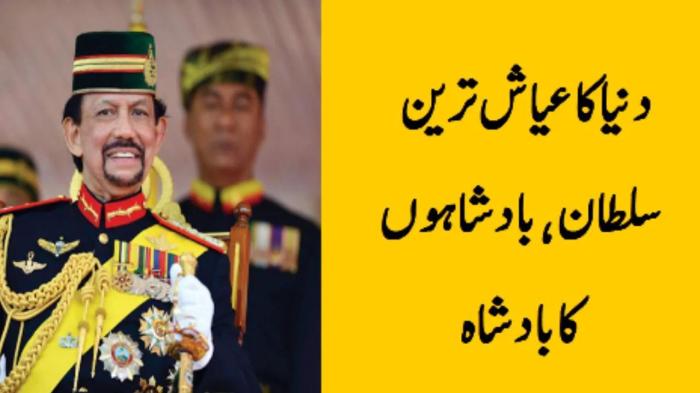
The Brunei royal family’s enormous wealth dates back to the 15th century when the kingdom became a major center for trade. Strategically located on the island of Borneo, Brunei’s position enabled it to control the lucrative trade routes between the Indian Ocean and the South China Sea. The country’s rich natural resources, especially oil and gas, further contributed to its economic boom.
Today, the Sultan of Brunei, Hassanal Bolkiah, is the world’s fifth-richest monarch, with an estimated net worth of over $20 billion.The Sultan’s role in acquiring and owning large portions of the country’s oil and gas reserves is a significant factor in the Brunei royal family’s immense wealth. Brunei’s oil reserves, which were discovered in the late 19th century, were initially managed by British colonial authorities.
However, upon gaining independence in 1984, the Sultan was able to take control of the country’s oil and gas resources. This led to a significant increase in the country’s economic fortunes, with revenues from oil and gas sales fueling the Sultan’s wealth and power.
The Rise of Brunei’s Oil and Gas Industry
The discovery of oil in 1929 marked the beginning of Brunei’s oil industry. The country’s oil reserves, estimated at over 1.5 billion barrels, have been managed by the state-owned Brunei Shell Petroleum Company, a joint venture between the Sultan and the British energy giant Shell. The company has been responsible for extracting and refining oil from Brunei’s vast reserves, generating significant revenue for the government and the Sultan.During the 1950s and 1960s, Brunei’s oil production increased significantly, driven by the country’s growing demand for energy.
The construction of the Brunei LNG plant in the 1970s further boosted the country’s oil and gas production, making it one of the world’s leading oil exporters. Today, Brunei’s oil and gas sector is one of the country’s largest sources of revenue, with the Sultan’s wealth heavily dependent on the industry’s performance.
Estimated Net Worth of the Sultan and the Royal Family
The Sultan of Brunei, Hassanal Bolkiah, and his royal family are one of the wealthiest and most influential families in the world. Their vast net worth is a result of centuries of strategic investments, smart business decisions, and a unique set of circumstances that have positioned them as one of the most powerful monarchies in Southeast Asia. In this section, we will delve into the breakdown of the Sultan’s and the royal family’s net worth, highlighting their investments and involvements in various industries.
The Sultan’s wealth is estimated to be over $100 billion, making him one of the richest people in the world. His net worth is comprised of numerous assets, including real estate, oil and gas reserves, and a significant share of the Brunei Investment Agency (BIA). The BIA is responsible for managing the Sultan’s investments, which have yielded impressive returns over the years.
The royal family’s involvement in various industries is extensive. One of their major investments is in the real estate sector. They own numerous properties around the world, including luxury apartments, hotels, and commercial buildings. Their hospitality ventures are also notable, with several high-end hotels and resorts bearing their name. These investments have generated significant revenue and helped solidify the royal family’s presence in the global business landscape.
Financially, the royal family is heavily invested in the oil and gas industry. They have a significant stake in the Brunei National Petroleum Company (BNPC), which operates several oil and gas fields in the region. The revenues generated from these operations have significantly contributed to the family’s wealth. The royal family’s net worth is also attributed to their involvement in other sectors, including technology, manufacturing, and finance.
They have invested in several companies, including the Brunei Darussalam Investment Authority (BDIA), which has a diverse portfolio of assets across various industries.
Real Estate Investments
The royal family’s real estate investments are vast and include properties in the UK, the US, and Singapore. They own several luxury apartments in London, including one at 10 Downing Street, the official residence of the British Prime Minister. Their real estate portfolio also includes high-end hotels and commercial buildings, which have generated significant revenue and helped solidify their presence in the global business landscape.
Some notable examples of the royal family’s real estate investments include:
- A $100 million luxury apartment in Manhattan, New York City.
- A $500 million real estate portfolio in the UK, including several office buildings and retail spaces.
- A $200 million stake in the iconic Savoy Hotel in London.
These investments have allowed the royal family to diversify their portfolio and hedge against market fluctuations. Their real estate investments have also generated significant rental income, further increasing their wealth.
Hospitality Ventures
The royal family’s hospitality ventures are also extensive, with several high-end hotels and resorts bearing their name. Their flagship hotel, the Brunei Suite Hotel, is a luxury property located in the heart of Brunei’s capital city. The hotel features 100 rooms and suites, as well as several dining options and a spa. The royal family’s hospitality ventures have generated significant revenue and helped solidify their presence in the global business landscape.
Some notable examples of the royal family’s hospitality investments include:
- The Brunei Suite Hotel, a 5-star luxury property in Brunei’s capital city.
- The Four Seasons Hotel Brunei, a 5-star property located in the heart of Brunei.
- The Ritz-Carlton, Brunei, a 5-star luxury property in the heart of Brunei.
These investments have allowed the royal family to diversify their portfolio and generate significant revenue through room bookings and other hospitality-related services. Their hospitality ventures have also helped establish the royal family’s presence in the global business landscape.
Financial Involvements
The royal family’s financial involvements are also notable, with several investment vehicles under their umbrella. Their most notable investment vehicle is the Brunei Investment Agency (BIA), which is responsible for managing the Sultan’s investments. The BIA has a diverse portfolio of assets across various industries, including real estate, oil and gas, and technology. Some notable examples of the royal family’s financial investments include:
- A $20 billion stake in the Brunei National Petroleum Company (BNPC), which operates oil and gas fields in the region.
- A $5 billion investment in the Brunei Darussalam Investment Authority (BDIA), which has a diverse portfolio of assets across various industries.
- A $10 billion stake in the Sultan’s private equity fund, which invests in various sectors, including real estate, technology, and manufacturing.
These investments have allowed the royal family to generate significant returns and solidify their presence in the global business landscape. Their financial involvements have also helped them hedge against market fluctuations and diversify their portfolio.
The royal family’s investments have generated significant returns and helped solidify their position as one of the wealthiest and most influential families in the world. Their unique set of circumstances and strategic business decisions have positioned them as one of the most powerful monarchies in Southeast Asia.
The royal family’s involvement in various industries and their significant investment portfolio have allowed them to diversify their wealth and generate significant revenue. Their wealth and influence have also had a significant impact on the global business landscape, solidifying their position as one of the most powerful and influential families in the world.
Art and Antiques Collection of the Brunei Royal Family

The Brunei Royal Family’s art and antiques collection is a testament to the country’s rich cultural heritage and its strategic location at the crossroads of ancient trade routes. Spanning centuries, the collection includes an impressive array of artworks and artifacts that reflect the country’s history, from ancient Islamic and Chinese influence to European colonizers and modern-day Brunei’s Islamic identity. This collection is a reflection of the royal family’s commitment to preserving and showcasing the country’s unique cultural heritage.
The Islamic Art and Antiques Collection
The Islamic art and antiques collection is one of the highlights of the Brunei Royal Family’s collection, with a focus on pieces from the 14th to the 19th centuries. This period saw the rise of Islamic art and architecture in Brunei, with the construction of mosques, palaces, and other structures that blended Islamic and indigenous influences. Some of the notable pieces in this collection include:
- The Kamariyah Mosque Tile
- The Brunei Royal Mosque’s intricate wooden door
- The Sultan Omar Ali Saifuddien Mosque’s stunning stained-glass windows
The Islamic art and antiques collection is not only a testament to the country’s rich history but also a reflection of the royal family’s commitment to preserving and promoting Islamic arts and culture.
The Chinese Art and Antiques Collection
The Chinese art and antiques collection is another notable subset of the Brunei Royal Family’s collection, with a focus on pieces from the Ming and Qing dynasties. This collection includes a range of artworks and artifacts, from porcelain vases and ceramics to bronze sculptures and jade carvings. Some of the notable pieces in this collection include:
- A Ming dynasty porcelain jar with intricate glaze details
- A Qing dynasty bronze sculpture of a mythical creature
- A collection of Chinese jade carvings depicting scenes from mythology
The Chinese art and antiques collection is a reflection of the country’s historical trade relationships with China and the significant cultural exchange that took place during this period.
The European Art and Antiques Collection
The European art and antiques collection is a relatively smaller subset of the Brunei Royal Family’s collection, with a focus on pieces from the 16th to the 19th centuries. This collection includes a range of artworks and artifacts, from European paintings and sculptures to furniture and decorative arts. Some of the notable pieces in this collection include:
- A 17th-century Dutch painting depicting a scene from the Netherlands
- A 19th-century French sculpture of a European monarch
- A collection of European furniture from the 18th century
The European art and antiques collection is a reflection of the country’s historical relationships with European colonizers and the cultural exchange that took place during this period.
Preservation and Conservation Efforts
The Brunei Royal Family has implemented various preservation and conservation efforts to protect and conserve the country’s cultural heritage. These efforts include:
| Effort | Description |
|---|---|
| Building a state-of-the-art museum | The Brunei Museum, which houses the art and antiques collection, is a state-of-the-art facility that uses advanced technologies to preserve and conserve the artworks and artifacts. |
| Conducting regular conservation and restoration work | The royal family employs a team of expert conservators and restorers to carry out regular conservation and restoration work on the artworks and artifacts. |
| Creating digital archives and databases | The royal family has created digital archives and databases to record and preserve the artworks and artifacts, allowing for easier access and study by scholars and researchers. |
The preservation and conservation efforts are crucial to ensuring the long-term survival of the country’s cultural heritage and the continued enjoyment of the art and antiques collection by future generations.
Influence of the Brunei Royal Family on the Business Sector: Net Worth Of Brunei Royal Family

The Brunei Royal Family has a profound impact on the business sector in Brunei, fostering a culture of entrepreneurship and innovation. As the custodians of the country’s wealth, they play a pivotal role in shaping the nation’s economic trajectory. Under the leadership of the Sultan, the government has implemented policies aimed at promoting business-friendly initiatives, which have significantly contributed to the country’s economic development.The Sultan’s role in promoting business-friendly policies cannot be overstated.
His Majesty’s commitment to creating a favorable business environment has led to the development of innovative industries, such as halal food processing and Islamic finance. The Brunei Investment Agency’s (BIA) investments in these sectors have not only generated significant revenue but also created employment opportunities for the local population. By encouraging entrepreneurship and innovation, the Sultan has ensured that Brunei remains a competitive player in the global economy.
Support for Local Entrepreneurs
The Brunei Royal Family’s support for local entrepreneurs has been a key factor in the country’s economic growth. The Sultan has consistently emphasized the importance of empowering local businesses, recognizing their potential to drive economic development. As a result, the Brunei Entrepreneurship Development Office (BEDO) was established to provide training and financing opportunities to budding entrepreneurs.The BEDO has been instrumental in nurturing successful businesses, such as Darussalam Assets, a pioneer in the halal industry.
Similarly, the BIA’s investments in local startups have enabled them to expand their operations, creating jobs and stimulating economic growth.
Advancements in Islamic Finance, Net worth of brunei royal family
The Brunei Royal Family’s initiatives in Islamic finance have positioned the country as a leader in this field. The establishment of the Islamic Development Bank (IDB) and the Brunei Darussalam Central Bank (BDCB) has facilitated the growth of Islamic banking and finance in the country.The use of Shariah-compliant financial instruments has enabled Brunei to tap into a global market of over 1.8 billion Muslims, who prefer to conduct their financial transactions in accordance with Islamic principles.
The BDCB’s efforts to develop a robust Islamic financial infrastructure have also attracted foreign investment, further bolstering the country’s economic growth.
Economic Diversification
The Brunei Royal Family’s focus on economic diversification has helped to reduce the nation’s reliance on crude oil, which accounts for the majority of the country’s revenue. By diversifying the economy, the Sultan has ensured that Brunei’s economic growth is more sustainable and less vulnerable to fluctuations in global oil prices.The BIA’s investments in sectors such as renewable energy, education, and tourism have contributed significantly to this effort.
These initiatives have not only created new employment opportunities but also encouraged the growth of a knowledge-based economy, positioning Brunei for long-term prosperity.
Conclusion
In conclusion, the Brunei Royal Family’s influence on the business sector has been instrumental in shaping the nation’s economic trajectory. Through their support for local entrepreneurs, advancements in Islamic finance, and economic diversification efforts, the Sultan has ensured that Brunei remains a competitive player in the global economy. By continuing to implement business-friendly policies, the Brunei Royal Family will undoubtedly propel the country towards sustained economic growth and development.
Closure

In conclusion, the Brunei royal family’s net worth is a testament to their cunning business acumen, strategic investments, and a rich history that spans centuries. From their impressive real estate portfolio to their exquisite art collection, the Sultan’s net worth is a fascinating case study of how wealth can be accumulated and preserved over generations. As we reflect on the Brunei royal family’s extraordinary net worth, we are left with a profound appreciation for the power of entrepreneurship, smart investments, and a deep understanding of global markets.
Clarifying Questions
Who is the richest member of the Brunei royal family?
The Sultan of Brunei, Hassanal Bolkiah, is the wealthiest member of the royal family, with an estimated net worth of over $20 billion.
What is the source of the Brunei royal family’s wealth?
The Brunei royal family’s wealth dates back to the 15th century, when the kingdom became a major center for trade. The Sultan’s strategic location on the Borneo island and the discovery of oil and gas reserves in the 1920s significantly contributed to their wealth.
What is the extent of the Brunei royal family’s real estate holdings?
The Brunei royal family owns a vast portfolio of residential and commercial properties around the world, including luxury apartments, mansions, and hotels.
What is the value of the Brunei royal family’s luxury vehicle collection?
The Brunei royal family’s luxury vehicle collection is worth hundreds of millions of dollars, featuring rare and exotic vehicles, including Rolls-Royces, Bentleys, and Ferrari.
