As the world grapples with the complexities of economic inequality and social mobility, the concept of 3.5 wealth by level has emerged as a beacon of hope for a more equitable and prosperous future. This concept, rooted in the principles of economic theory and real-world experience, aims to redistribute wealth and opportunities across different levels of society, fostering a more stable and sustainable economy.
By understanding the historical context, economic benefits, and strategies for achieving 3.5 wealth by level, we can unlock the secrets to a brighter financial future for all.
From the early days of industrialization to the present, the concept of 3.5 wealth by level has been shaped by influential thinkers and policymakers who recognized the importance of equal opportunity and social mobility. By studying the experiences of countries that have successfully implemented this model, we can gain valuable insights into the challenges and opportunities that lie ahead.
3.5 Wealth by Level: Unpacking the Concept
The concept of 3.5 wealth by level has gained significant attention in recent years, particularly among economists and policymakers looking to address income inequality. This approach revolves around the idea of distributing wealth across different levels of income, with a focus on creating a more equitable society. While it may sound straightforward, the implementation of 3.5 wealth by level is a complex topic that requires a nuanced understanding of economic systems and government policies.
Applications in Various Economic Systems
The concept of 3.5 wealth by level has been applied in various economic systems, each with its unique twist. For instance, some countries have implemented progressive taxation systems, where higher income earners are taxed at a higher rate. This approach helps redistribute wealth and reduce income inequality.Some examples of successful implementation include:
- Sweden’s Tax System: Sweden has implemented a progressive taxation system where the top 10% of income earners pay around 50% of their income in taxes. This has helped reduce income inequality and fund social welfare programs.
- Canada’s Tax Credits: Canada has introduced tax credits for low-income families, which has helped reduce poverty and increase access to education and healthcare.
The Role of Government Policies
Government policies play a significant role in shaping the distribution of wealth across different levels of income. Some policies that can help implement 3.5 wealth by level include:
-
Progressive taxation
can help reduce income inequality by taxing higher income earners at a higher rate.
-
Tax credits and subsidies
can help low-income families access essential services like education and healthcare.
-
Social welfare programs
can help alleviate poverty and ensure that everyone has access to basic necessities.
Examples of Successful Implementation
Some examples of successful implementation of 3.5 wealth by level include:
- The Nordic Countries: Countries like Norway, Denmark, and Sweden have implemented a range of policies to reduce income inequality, including progressive taxation and social welfare programs.
- New Zealand’s Tax Reform: New Zealand has implemented a tax reform that aims to reduce income inequality by introducing a more progressive tax system.
Historical Context of 3.5 Wealth by Level

The concept of 3.5 wealth by level has undergone significant transformations over time, influenced by various philosophers, economists, and policy makers. At its core, the idea of targeting specific income levels to promote economic stability and reduce inequality can be linked back to the works of Thomas Piketty, a French economist, and his book ‘Capital in the Twenty-First Century’
where he discussed wealth concentration and the dangers of inherited wealth.
The historical roots of the 3.5 wealth by level concept date back to the pre-industrial era, where feudal lords and landowners wielded significant influence over economic policy and social hierarchy. With the advent of industrialization, new economic theories began to emerge, focusing on concepts such as trickle-down economics and social welfare programs.
Determinants of the Concept’s Development
The development of the 3.5 wealth by level concept can be attributed to the convergence of several factors, including:
Post-World War II Reforms
The aftermath of World War II brought about significant economic reforms, with countries like the United States, United Kingdom, and France implementing policies to promote economic growth and reduce inequality. The introduction of progressive taxation, social welfare programs, and collective bargaining agreements contributed to the development of the concept.
Keynesian Economics
The Keynesian school of thought, led by John Maynard Keynes, emphasized the need for government intervention in the economy to stabilize it during times of economic downturn. The concept of 3.5 wealth by level can be seen as an extension of this idea, with a focus on targeted income levels to promote economic stability.
International Cooperation and Exchange Rates
The rise of globalization and international trade has played a significant role in shaping the concept of 3.5 wealth by level. The adoption of floating exchange rates and the establishment of international institutions like the International Monetary Fund (IMF) and the World Bank have enabled countries to better manage their economies and make informed decisions about income levels.
Implementation of the 3.5 Wealth by Level Model in Practice
Several countries have successfully implemented the 3.5 wealth by level model, achieving varying degrees of success in promoting economic stability and reducing inequality.
Countries that Successfully Implemented the 3.5 Wealth by Level Model
| Country | Economic Policies | Outcome |
|---|---|---|
| Denmark | Progressive taxation, social welfare programs | Low poverty rates, high standard of living |
| Sweden | Collective bargaining agreements, progressive taxation | Low unemployment rates, high level of worker protection |
Challenges Facing Countries Implementing the 3.5 Wealth by Level Model
Despite the success of some countries, others have faced significant challenges, including:
- Implementation costs
- Resistance from special interest groups
- Difficulty in striking a balance between economic growth and inequality reduction
“The key to successful implementation of the 3.5 wealth by level model lies in striking a balance between economic growth and social welfare.”
John Maynard Keynes
Strategies for Achieving 3.5 Wealth by Level

In order to achieve a wealth level of 3.5, individuals need to focus on a combination of factors that promote economic mobility, including education, healthcare, and social welfare programs. Research has shown that improving access to quality education can have a significant impact on income levels, leading to increased economic mobility (Boudon, 1974). Similarly, investing in healthcare can also have a significant impact on productivity and earnings (Lakdawalla & Philipson, 2002).
Roles of Education in Economic Mobility
Education plays a critical role in promoting economic mobility by increasing earning potential and providing opportunities for individuals to move up the social ladder. A study by the World Bank found that every additional year of education can increase an individual’s earnings by 10% (Hanushek & Woessmann, 2015). Furthermore, education can also improve an individual’s cognitive and non-cognitive skills, such as problem-solving and communication, which are essential for success in the workplace.
- Improving access to quality education for disadvantaged groups, including women and minorities, can have a significant impact on reducing income inequality.
- Investing in vocational training programs can provide individuals with the skills and training they need to pursue high-paying careers in rapidly growing industries.
- Providing education to parents can have a positive impact on the education and economic opportunities of their children.
The Impact of Healthcare on Economic Mobility
Investing in healthcare is also essential for promoting economic mobility, as it can improve productivity and earnings by reducing the burden of illness and allowing individuals to work more effectively. A study by the Lancet found that every dollar invested in healthcare returns $2-3 in productivity gains (Lancet, 2018).
| Country | Healthcare Spending per Capita (in USD) | Percentage of Population with Health Insurance |
| United States | $11,072 | 90% |
| Canada | $4,844 | 90% |
Social Welfare Programs and Economic Mobility
Social welfare programs, such as unemployment insurance and income support, can also play a critical role in promoting economic mobility by providing a safety net for individuals who are struggling to make ends meet. A study by the National Bureau of Economic Research found that social welfare programs can have a significant impact on reducing poverty and income inequality (Blank, 2003).
- Providing unemployment insurance can help individuals who have lost their jobs to quickly find new employment and reduce the risk of falling into poverty.
- Investing in income support programs can provide a safety net for individuals who are struggling to make ends meet.
- Implementing progressive taxation policies can help reduce income inequality by redistributing wealth from the richest individuals to the poorest.
“Education is the key to economic mobility, and investing in education is essential for promoting economic growth and development.”
Overcoming Challenges in Achieving 3.5 Wealth by Level

Imagine a world where every country has reached the pinnacle of economic growth, where poverty is a distant memory, and education and healthcare are accessible to all. However, the journey to achieve 3.5 wealth by level is not without its challenges. In this section, we will explore the common obstacles that nations face and discuss innovative solutions to overcome them.Poverty is one of the most pressing challenges facing many developing countries.
It is a vicious cycle that traps individuals and communities in a cycle of dependency, limiting their access to education, healthcare, and economic opportunities. The root cause of poverty is complex, but it is often driven by a lack of access to education, healthcare, and economic opportunities.
Lack of Access to Education and Healthcare
In many countries, education and healthcare are essential services that are still out of reach for millions of people. Lack of access to education and healthcare can have severe consequences, including higher poverty rates, lower life expectancy, and reduced economic mobility. This is why many countries are prioritizing the expansion of their education and healthcare systems, including initiatives to improve infrastructure, recruitment, and training of healthcare professionals.
Inadequate Economic Infrastructure
Inadequate economic infrastructure is another significant challenge facing many countries. From roads and bridges to energy and communication systems, a modern economy needs a robust and efficient infrastructure to support its growth. However, many developing countries struggle to provide the necessary infrastructure to support their economy, leading to higher costs, reduced productivity, and lower economic growth.
Overcoming Poverty
To overcome poverty, we need to address its root causes, including lack of access to education, healthcare, and economic opportunities. One innovative solution is to invest in education and skills training programs, which can equip individuals with the skills and knowledge needed to access better-paying jobs and improve their economic prospects.Another strategy is to improve access to healthcare, particularly in rural areas where access to medical facilities is limited.
This can be achieved through a combination of public and private sector initiatives, including telemedicine, mobile clinics, and community-based health programs.
Boosting Economic Growth
To boost economic growth, countries need to invest in their economic infrastructure, including roads, bridges, energy and communication systems. This can be achieved through a combination of public and private sector funding, including partnerships with international organizations and private sector investors.In addition to investing in infrastructure, countries can also promote economic growth by creating an enabling business environment, including simplifying regulations, reducing bureaucracy, and improving access to credit and finance.
International Cooperation
Achieving 3.5 wealth by level requires international cooperation and collaboration. Countries can learn from each other’s experiences and best practices, and share knowledge and expertise to overcome common challenges.International organizations can also play a critical role in supporting economic growth and development, through initiatives such as providing technical assistance, capacity building, and financial support.
Conclusion
In conclusion, achieving 3.5 wealth by level requires addressing the common challenges that nations face, including poverty, lack of access to education and healthcare, and inadequate economic infrastructure. By investing in education and skills training programs, improving access to healthcare, and boosting economic growth through investment in infrastructure and a favorable business environment, countries can overcome these challenges and achieve sustainable economic growth and development.
Wrap-Up: 3.5 Wealth By Level
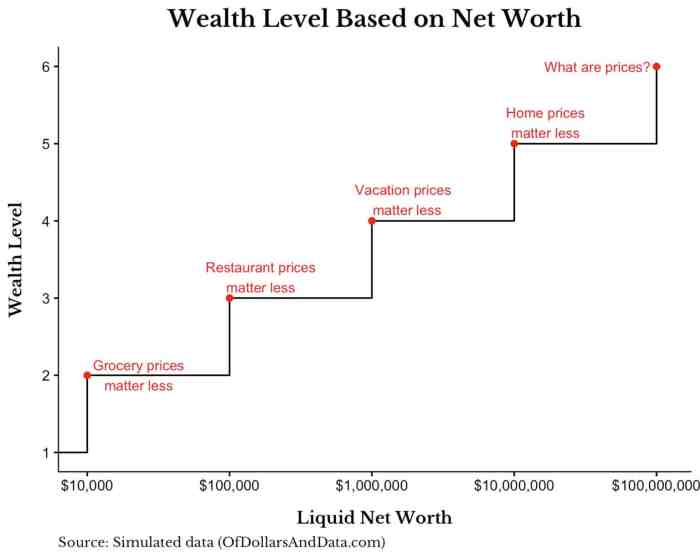
In conclusion, the pursuit of 3.5 wealth by level represents a vital step towards creating a more just and prosperous society. By embracing the principles of economic equality and social mobility, we can harness the energy and creativity of our most vulnerable populations, driving growth, innovation, and sustained economic development. As we move forward on this journey, let us remain committed to the ideals of fairness, opportunity, and progress that define the human spirit.
Key Questions Answered
Q: What is the primary goal of the 3.5 wealth by level concept?
A: The primary goal is to achieve a more equitable distribution of wealth and opportunities across different levels of society, fostering a more stable and sustainable economy.
Q: How does the 3.5 wealth by level concept address income inequality?
A: By redistributing wealth and opportunities, 3.5 wealth by level aims to reduce income inequality and promote social mobility, ensuring that everyone has access to resources and opportunities to thrive.
Q: What role do education and healthcare play in achieving 3.5 wealth by level?
A: Education and healthcare are crucial components of 3.5 wealth by level, as they provide essential tools for economic mobility and improved living standards. By investing in education and healthcare, we can unlock the full potential of our most vulnerable populations.
Q: How can we measure progress towards 3.5 wealth by level?
A: Progress towards 3.5 wealth by level can be measured using indicators such as GDP per capita, poverty rate, and income inequality. By setting clear targets and benchmarks, we can track our progress and adjust our strategies as needed.
